
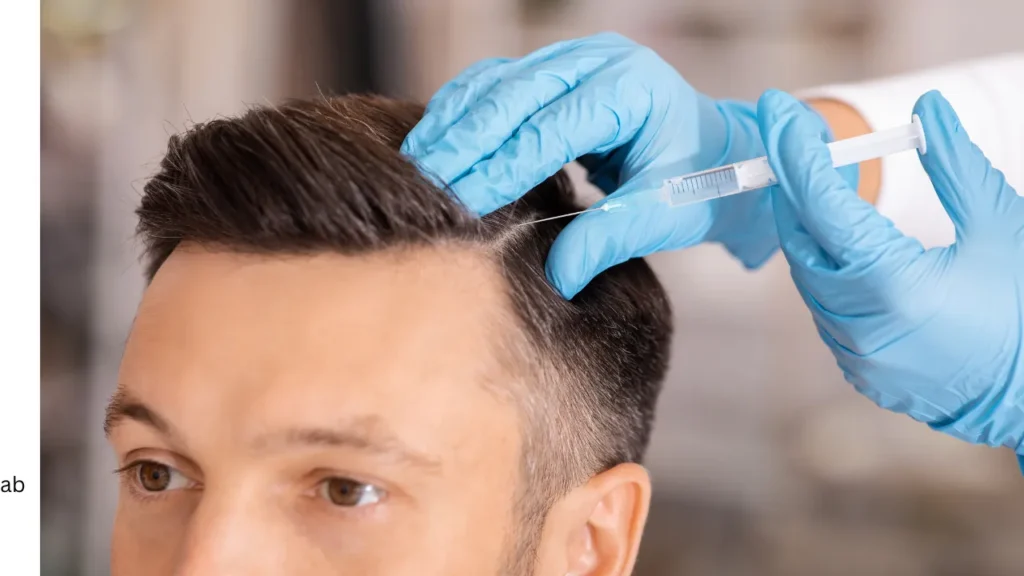
Platelet-rich plasma, commonly known as PRP, is one of the most discussed topics in aesthetic medicine. Patients ask about it for skin rejuvenation and hair restoration, colleagues discuss it in training, and social media presents it in very different ways. For a doctor considering offering PRP, the first task is not to learn a sales pitch. It is to understand, in general terms, what PRP is, what it is not, where it is discussed, and what good training should cover.
This guide is written for MBBS doctors and healthcare professionals. It explains PRP at a conceptual level, explores skin and hair applications as they are generally discussed, and sets out the assessment, expectation-setting and safety thinking that should come before any service is offered. It contains no preparation protocols, volumes or dosing information, because those details belong in structured, supervised training and individual clinical judgement, not in a general article.
PRP is best understood as part of regenerative thinking in aesthetic medicine: using the body’s own biological material, in a clinical context, to support skin and hair care. That idea is appealing, but appeal is not evidence, and enthusiasm should never replace assessment.
What PRP is — and what it is not
In general terms, PRP is plasma prepared from a patient’s own blood, with a higher concentration of platelets than in whole blood. Platelets are involved in healing and tissue repair, and growth factors associated with platelets are often discussed in regenerative medicine. That biological rationale is why PRP is studied and used in several areas of medicine, including aesthetic practice.
What PRP is not is equally important. It is not a single standardised product, because preparation methods, patient factors and clinical contexts vary. It is not a guaranteed treatment for any condition, and it is not a replacement for assessment, diagnosis or other care where those are needed. Results, where they occur, are generally gradual and variable, and they depend on patient selection, expectations and follow-up.
Doctors should also be careful with language. Describing PRP as natural does not make it risk-free, and describing it as regenerative does not make it suitable for every patient. Clear, evidence-based language protects patients and supports professional credibility.
- PRP is derived from the patient’s own blood, in general terms.
- Platelets are associated with healing and tissue repair processes.
- PRP is not standardised, guaranteed, or suitable for everyone.
- Evidence and suitability should be discussed honestly, case by case.
Where PRP is discussed in skin rejuvenation and hair restoration
In skin rejuvenation, PRP is discussed in relation to skin quality, texture, tone and overall appearance, often as part of a broader plan that includes skin assessment, sun protection and general skin care. It is not presented here as a specific treatment for a specific condition, but as a topic doctors encounter when patients ask about improving skin health and appearance over time.
In hair restoration, PRP is discussed in relation to hair thinning and scalp health, again as part of a broader assessment that includes medical history, pattern of hair loss, expectations and other relevant factors. Hair concerns can have many causes, and a doctor should assess the individual case rather than assume PRP is the right approach.
In both areas, the key point is context. PRP is rarely discussed in isolation in good training. It is discussed alongside assessment, skin and scalp health, combination care, follow-up and the limits of current evidence. That broader view helps doctors avoid over-promising and helps patients make informed decisions.
Patient assessment: suitability, expectations and when to pause or refer
Assessment comes before offering PRP. A doctor should take a medical history, explore skin or scalp concerns, previous treatments, medicines and general health in broad terms, and consider whether PRP is suitable for this patient at this time. Some patients may need a different approach, further evaluation, or time to consider options. Learning to pause is a clinical skill, not a failure.
Expectations should be discussed in plain language. What might PRP support, what is uncertain, how gradual change may be, and what follow-up may involve? Patients should understand that individual responses vary and that a specific outcome cannot be promised. Written information, careful notes and time for questions all support informed consent.
Safety thinking is part of assessment. Doctors should consider general health, skin and scalp condition, infection risk in broad terms, healing, and any factors that suggest a need for further advice or referral. They should also have a clear plan for follow-up, documentation and escalation if a patient has concerns after care. Good training teaches these principles, not only the concept of PRP itself.
How PRP thinking connects with microneedling and combination care
PRP is often discussed alongside other skin treatments, including Microneedling. Microneedling is generally described as a treatment that creates controlled micro-channels in the skin, and it is sometimes discussed in combination with PRP in training and clinical discussion. The point for a learning doctor is not to assume that combining treatments is always better. It is to understand how different approaches interact, how skin responds, and how a plan should be built around assessment rather than around a combination that is popular.
Combination care requires the same discipline as single treatment care: assessment first, a clear rationale, discussion of benefits and limitations, and follow-up. Adding treatments can add complexity, cost and risk, and it can make it harder to know what helped if problems arise. A measured, stepwise approach is usually safer and more informative.
| Question | Good practice | Risk if skipped |
|---|---|---|
| Is this patient suitable? | Full history and examination in general terms | Unsuitable or poorly timed care |
| Are expectations realistic? | Plain-language discussion, no guaranteed outcome | Disappointment and loss of trust |
| Is combination needed? | Clear rationale, stepwise planning | Unnecessary complexity and risk |
| What is the follow-up? | Documentation, review and escalation plan | Missed concerns and poor continuity |
What doctor training in PRP should include
Good PRP training should cover the biology of platelets and healing in general terms, the evidence base and its limits, patient assessment, suitability and expectations, safety, consent and documentation, and follow-up. It should also include clinical case discussion, because cases show how principles apply when a patient has more than one concern or when information is incomplete.
Training should be honest about uncertainty. Where evidence is limited or variable, teachers should say so. Where a topic requires supervised practical learning, that should be made clear. A course that only presents success stories, without discussing limitations, complications in general terms, and when to refer, is not sufficient preparation for clinical practice.
Finally, training should connect PRP to broader aesthetic practice. Skin assessment, consultation, safety and ethical practice matter for PRP just as they matter for other treatments. A doctor who is strong in those foundations will be better placed to use PRP thoughtfully, and to know when not to use it.
FAQs
What is PRP, in simple terms? PRP is plasma prepared from a patient’s own blood, with a higher concentration of platelets than whole blood. Platelets are associated with healing and tissue repair, which is why PRP is discussed in regenerative and aesthetic medicine.
Is PRP suitable for every patient? No. Suitability depends on individual assessment, medical history, skin or scalp concerns, expectations and other factors. A doctor should assess each case and, where appropriate, advise waiting, a different plan, or further advice.
Does PRP work for skin and hair? PRP is discussed for skin rejuvenation and hair restoration, but responses vary and evidence has limits. Doctors should discuss benefits, uncertainty and gradual change honestly, without promising a specific outcome.
Should PRP be combined with microneedling? Combination care is sometimes discussed, but it should not be assumed to be better. Any combination needs a clear rationale, assessment, discussion of benefits and limitations, and follow-up.
What should I look for in PRP training? Look for teaching on biology in general terms, evidence and its limits, assessment, consent, safety, documentation and follow-up, with clinical case discussion. Training should be honest about uncertainty and about when to refer.
Is PRP risk-free because it comes from the patient’s own blood? No. Natural origin does not mean risk-free. Assessment, safety thinking, consent, careful practice and follow-up remain essential, as with any clinical procedure.
Learn PRP with assessment at the centre
For structured, live online teaching on PRP for doctors and healthcare professionals, explore the PRP course at RALM Academy. For enrolment enquiries, call +92 311 6755667. Understand first, assess carefully, and offer PRP only where it genuinely fits the patient in front of you.
Disclaimer: This post provides general educational information for healthcare professionals. It is not medical advice and is not a substitute for individual clinical judgement.